ScienceDaily (July 29, 2012) ? A team of British and Australian scientists has discovered an important method of how carbon is drawn down from the surface of the Southern Ocean to the deep waters beneath. The Southern Ocean is an important
Reporting this week in the journal Nature Geoscience, scientists from British Antarctic Survey (BAS) and Australia's national research agency, the Commonwealth Scientific and Industrial Research Organisation (CSIRO), reveal that rather than carbon being absorbed uniformly into the deep ocean in vast areas, it is drawn down and locked away from the atmosphere by plunging currents a thousand kilometres wide.
Winds, currents and massive whirlpools that carry warm and cold water around the ocean -- known as eddies -- create localised pathways or funnels for carbon to be stored.
Lead author, Dr Jean-Baptiste Sall?e from British Antarctic Survey says, "The Southern Ocean is a large window by which the atmosphere connects to the interior of the ocean below. Until now we didn't know exactly the physical processes of how carbon ends up being stored deep in the ocean. It's the combination of winds, currents and eddies that create these carbon-capturing pathways drawing waters down into the deep ocean from the ocean surface.
"Now that we have an improved understanding of the mechanisms for carbon draw-down we are better placed to understand the effects of changing climate and future carbon absorption by the ocean."
CSIRO co-author, Dr Richard Matear says the rate-limiting step in the anthropogenic carbon uptake by the ocean is the physical transport from the surface into the ocean interior.
"Our study identifies these pathways for the first time and this matches well with observationally-derived estimates of carbon storage in the ocean interior," Dr Matear says.
Due to the size and remote location of the Southern Ocean, scientists have only recently been able to explore the workings of the ocean with the help of small robotic probes -- known as Argo floats. In 2002, 80 floats were deployed in the Southern Ocean to collect information on the temperature and salinity. This unique set of observations spanning 10 years has enabled scientists to investigate this remote region of the world for the first time. The floats are just over a metre in length and dive to depths of 2km. Today, there are over 3,000 floats in the oceans worldwide providing detailed information used in oceanic climate models.
The team also analysed temperature, salinity and pressure data collected from ship-based observations since the 1990s. The instrument used for this is called a CTD profiler which is a cluster of sensors taking measurements as it's lowered deep down into the ocean to depths of more than 7km.
Share this story on Facebook, Twitter, and Google:
Other social bookmarking and sharing tools:
Story Source:
The above story is reprinted from materials provided by British Antarctic Survey.
Note: Materials may be edited for content and length. For further information, please contact the source cited above.
Journal Reference:
- Jean-Baptiste Sall?e, Richard J. Matear, Stephen R. Rintoul, Andrew Lenton. Localized subduction of anthropogenic carbon dioxide in the Southern Hemisphere oceans. Nature Geoscience, 2012; DOI: 10.1038/ngeo1523
Note: If no author is given, the source is cited instead.
Disclaimer: Views expressed in this article do not necessarily reflect those of ScienceDaily or its staff.
Source: http://feeds.sciencedaily.com/~r/sciencedaily/~3/3IU6n-A8xKw/120729142245.htm
venus williams Freeh Report serena williams direct tv wimbledon ray allen Savages


 ? Register with Postbit - Free!
 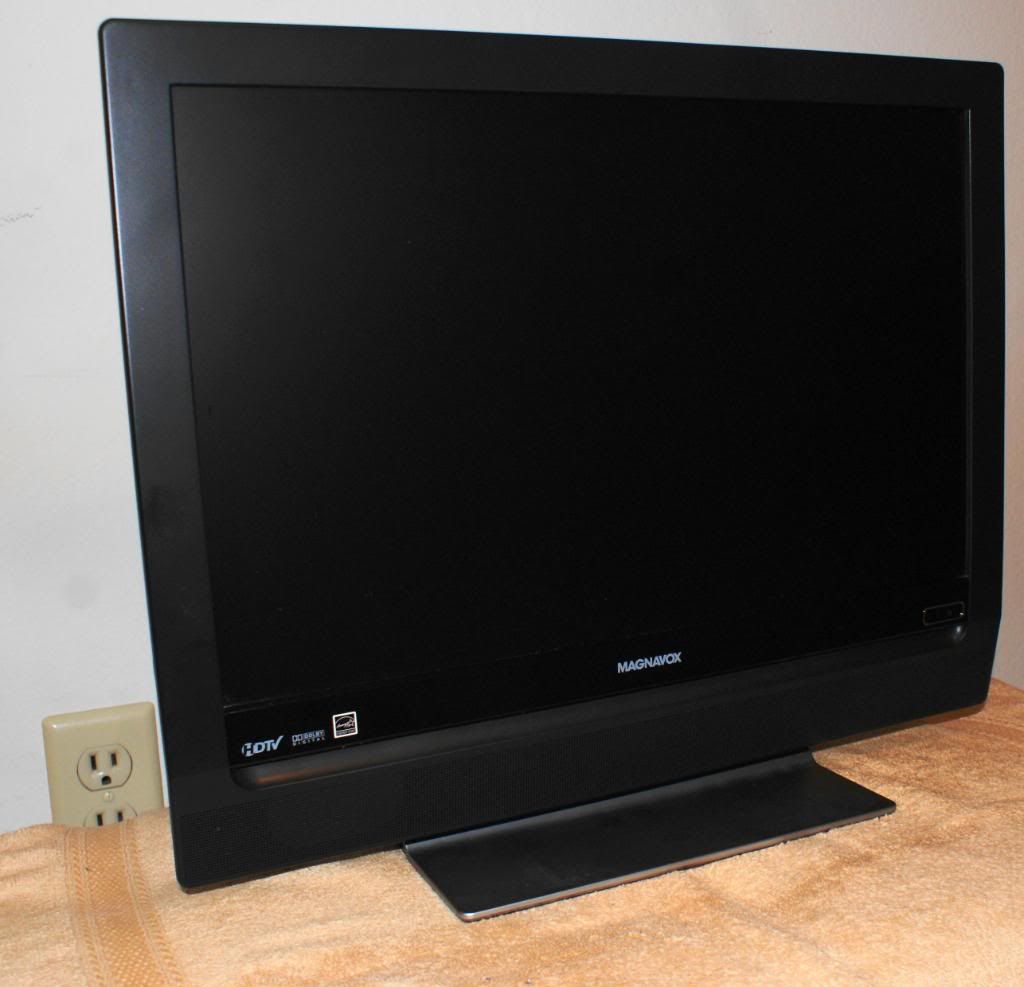 While some manufacturers outside the UNITED KINGDOM make conventional CRT (Cathode Ray Tube) sets in HDTV setting, that looks not likely to occur in the united kingdom, given the current boom in product sales involving flat-screen TVs making use of either FLAT SCREEN (Liquid Crystal clear Display) or even Lcd technology.
My suggestion would certainly end up being that you buy a flat-screen TV if you want to future-proof yourself towards HDTV. The particular thorny issue is, nevertheless -- precisely what standards scenario look for?
This problem is complex - due to the fact to date there is no predetermined Western HDTV standard. To return to what we now have in the UK right now, most TV sets use a 625-line standard -- that is to say, the image on your own TV display is actually efficiently composed of 625 horizontally lines from top to bottom. What goes on could be that the picture (whether it has originate from a good analogue or even an electronic digital source) is 'painted' onto the display screen line-by-line fifty times another -- quick plenty of for your eye as well as human brain in order to translate precisely what it sees as an effortlessly shifting picture.
In case you scanned all the outlines through 1-625 one-by-one, rather than alternately, that would be called 'progressive' scanning. And if you did which twenty-five moments another, your own picture would look much better: because your TV set would certainly effectively become providing your eyes and brain two times as much details for each second (625 outlines 25 instances per second instead of 1 / 2 that quantity 25 times for each second).
While some manufacturers outside the UNITED KINGDOM make conventional CRT (Cathode Ray Tube) sets in HDTV setting, that looks not likely to occur in the united kingdom, given the current boom in product sales involving flat-screen TVs making use of either FLAT SCREEN (Liquid Crystal clear Display) or even Lcd technology.
My suggestion would certainly end up being that you buy a flat-screen TV if you want to future-proof yourself towards HDTV. The particular thorny issue is, nevertheless -- precisely what standards scenario look for?
This problem is complex - due to the fact to date there is no predetermined Western HDTV standard. To return to what we now have in the UK right now, most TV sets use a 625-line standard -- that is to say, the image on your own TV display is actually efficiently composed of 625 horizontally lines from top to bottom. What goes on could be that the picture (whether it has originate from a good analogue or even an electronic digital source) is 'painted' onto the display screen line-by-line fifty times another -- quick plenty of for your eye as well as human brain in order to translate precisely what it sees as an effortlessly shifting picture.
In case you scanned all the outlines through 1-625 one-by-one, rather than alternately, that would be called 'progressive' scanning. And if you did which twenty-five moments another, your own picture would look much better: because your TV set would certainly effectively become providing your eyes and brain two times as much details for each second (625 outlines 25 instances per second instead of 1 / 2 that quantity 25 times for each second).
 A good HIGH DEFINITION TV transmission utilizes a number of involving 3 techniques to make the image appear much better: it boosts the number of outlines to be scanned; and/or it makes use of accelerating scanning service instead of interlaced scanning; and/or it works the outlines at a faster rate (e. gary the gadget guy. 50 moments a second rather than 25).
Both methods that HIGH DEFINITION TV tv producers beyond the BRITISH have a tendency to make use of most are known as 1080i as well as 720p: that is to say, 1080 lines scanned in interlaced setting; and 720 lines scanned in modern setting. In Europe, broadcasters and also manufacturers have in essence arranged that both regular is suitable, and also have got together to be able to say yes to some thing called the 'HD Ready' standards. Essentially, this lays lower that an 'HD Ready' arranged should conform to the following functions:
Thus you're considering buying a lcd TELEVISION? It seems we all want a set display TV, benefit definition the plasma displays offer, and also the ability to view the screen through any kind of position, but here are a few things need to know and may even want to think about before taking jump.
Samsung RF511
A good HIGH DEFINITION TV transmission utilizes a number of involving 3 techniques to make the image appear much better: it boosts the number of outlines to be scanned; and/or it makes use of accelerating scanning service instead of interlaced scanning; and/or it works the outlines at a faster rate (e. gary the gadget guy. 50 moments a second rather than 25).
Both methods that HIGH DEFINITION TV tv producers beyond the BRITISH have a tendency to make use of most are known as 1080i as well as 720p: that is to say, 1080 lines scanned in interlaced setting; and 720 lines scanned in modern setting. In Europe, broadcasters and also manufacturers have in essence arranged that both regular is suitable, and also have got together to be able to say yes to some thing called the 'HD Ready' standards. Essentially, this lays lower that an 'HD Ready' arranged should conform to the following functions:
Thus you're considering buying a lcd TELEVISION? It seems we all want a set display TV, benefit definition the plasma displays offer, and also the ability to view the screen through any kind of position, but here are a few things need to know and may even want to think about before taking jump.
Samsung RF511 


